
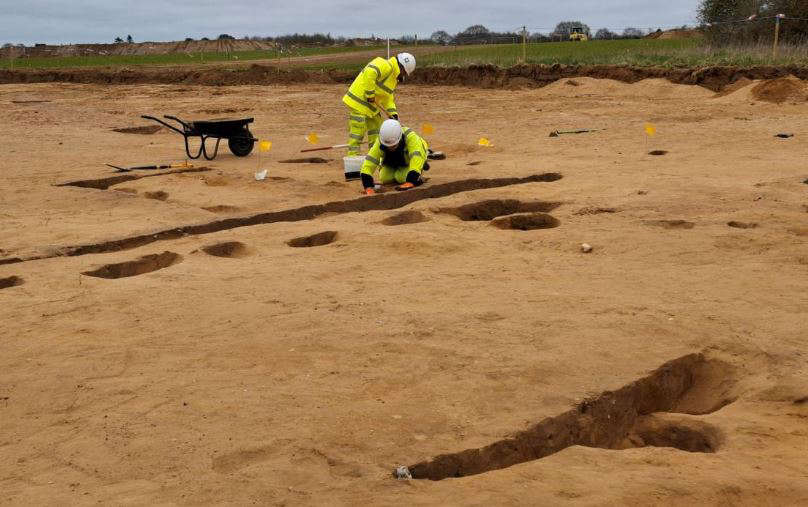
A major archaeological dig in Suffolk has uncovered an entire lost landscape, including an Anglo-Saxon settlement near Friston and medieval industrial activity on the Sizewell coast.
The work, carried out by a team of ninety archaeologists from MOLA Wessex Archaeology for ScottishPower Renewables, has exposed more than twenty-four hectares of historic remains. Researchers say the discoveries help build a much clearer picture of how communities once lived and worked across this part of East Anglia.
Near Friston, archaeologists uncovered the footprint of a small Anglo-Saxon settlement made up of wooden longhouses. The buildings have long since disappeared, but rows of post holes show the structures were substantial. One modern public footpath appears to line up perfectly with the layout of the former village, suggesting the route may have been in use for centuries.
Across the wider dig area, teams also recovered evidence of prehistoric toolmaking, including a complete flint arrowhead and a finely made axe head. Both are rare finds due to their age and condition.
On the coast near Sizewell, the excavation revealed medieval kilns that are thought to have supported local pottery or lime production. Archaeologists say these industrial remains show how active the area was long before the modern energy developments.
Project leaders say the findings highlight long-standing links between communities in East Anglia and groups across Europe, supported by the discovery of pottery associated with the early Bronze Age “Beaker folk.”
The team will continue studying the site, with initial results being shared in a free online webinar open to the public in the New Year.
 Aldeburgh's Jubilee Hall Fundraiser
 Two Vehicle Crash Shuts A145 at Brampton
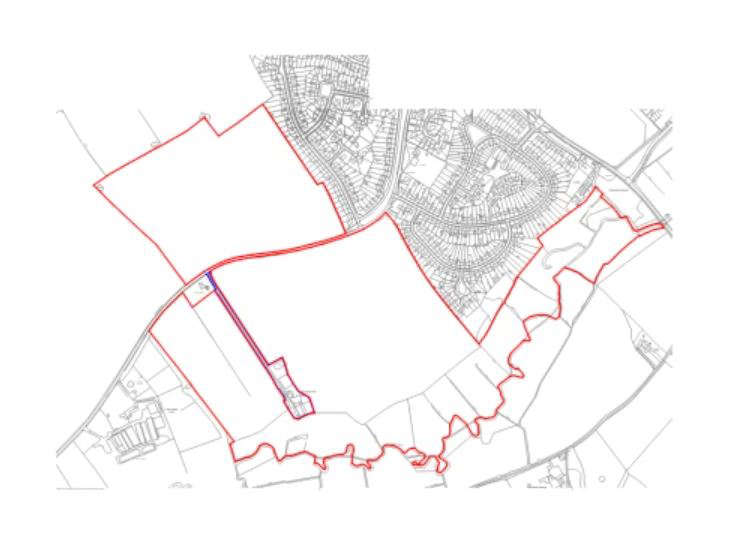 Plans for Hundreds of New Homes in Halesworth
 Police Pursuit Ends near Carlton Colville
 Halesworth's Football Cup Run Ends
 Tributes Pour in for Lowestoft Teenager
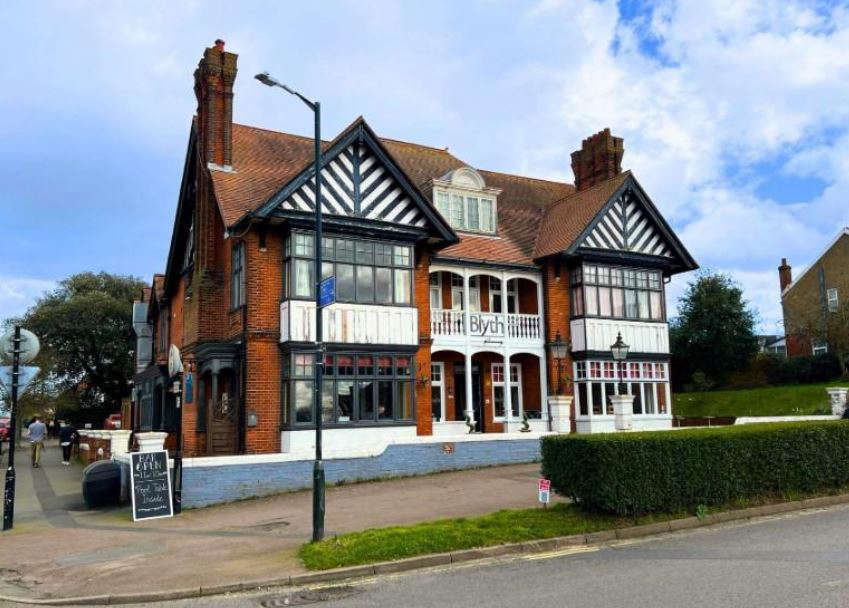 New Era for Historic Southwold Building
 Suffolk Man Jailed for Attacking Woman